It’s easy to assume that all exterior cleaning is the same. After all, water is water, right? But once you start looking closer at the surfaces around your home, such as your siding, roof, driveway and deck, you’ll quickly realize that not all materials can handle the same level of pressure. Moreover, using the wrong method can actually cause damage.
Understanding the difference between soft washing and pressure washing helps you make better decisions about how your property is cleaned and protected over time.
What Soft Washing Actually Does
Soft washing is designed for surfaces that require a more controlled, low-pressure approach. Instead of relying on force, it uses specialized cleaning solutions to break down and remove organic growth like algae, mold, and mildew.
This matters because many of the stains you see on siding or roofing aren’t just sitting on the surface, they’re actually living organisms. Simply blasting them with high pressure might remove the visible layer, but it doesn’t address what’s beneath.
With soft washing, the cleaning solution does the heavy lifting. Low-pressure water is then used to rinse everything away, leaving the surface clean without the risk of damage.
Where Soft Washing Is the Better Choice
Some areas of your home are especially vulnerable to high pressure. Siding, roofing materials, painted surfaces, and wood structures all fall into this category.
On a roof, for example, high pressure can loosen or damage shingles. On siding, it can force water behind panels or strip away protective finishes. Even wood fences and decks can be gouged or splintered if the pressure is too aggressive.
Soft washing allows these surfaces to be cleaned thoroughly while maintaining their integrity. It’s the safer, more effective approach when the goal is long-term care.
How Pressure Washing Works
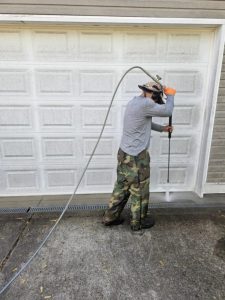
Pressure washing takes a different approach. Instead of relying on cleaning solutions to break down buildup, it uses high-pressure water to remove dirt, grime, and stains from durable surfaces.
This method is ideal for materials that can handle that level of force. Concrete driveways, sidewalks, and certain hardscapes benefit from pressure washing because it can lift embedded dirt and restore a cleaner appearance more quickly.
It’s especially effective when dealing with surface-level buildup or stains that haven’t penetrated deeply into the material.
Where Pressure Washing Makes the Most Sense
Not every surface needs a gentle touch. Concrete and other hard, non-porous materials are built to withstand pressure, which makes pressure washing the right tool for the job.
Driveways, walkways, and patios often accumulate dirt, tire marks, and environmental buildup that require more than just a rinse. In these cases, pressure washing provides the level of cleaning needed to refresh the surface.
That said, even on these surfaces, technique matters. Too much pressure or the wrong angle can still cause etching or uneven cleaning if not handled properly.
Why the Difference Matters for Your Home
The biggest misconception about exterior cleaning is that stronger always means better. In reality, the right method depends entirely on the surface being cleaned.
Using high pressure where it doesn’t belong can shorten the lifespan of materials, create moisture issues, and lead to costly repairs down the line. On the other hand, using a method that’s too gentle on the wrong surface may not deliver the results you’re looking for.
A professional approach considers both the material and the type of buildup before choosing how to clean it. That’s what ensures the job is done safely and effectively.
If you’re not sure which method your home needs, Bourbon Capital Softwash can help you take the guesswork out of the process. When you need soft washing and power washing services in the Louisville area, reach out to us.
Leave a Reply